Treatment
Dental Veneers in Mesa, AZ
You don't like your front teeth in photographs, and you've been wondering for a while whether anything can be done about it.
If whitening or a small repair would get you most of the way there, that's what we'll tell you, including when you came in asking about veneers.
The treatment
What a veneer actually is
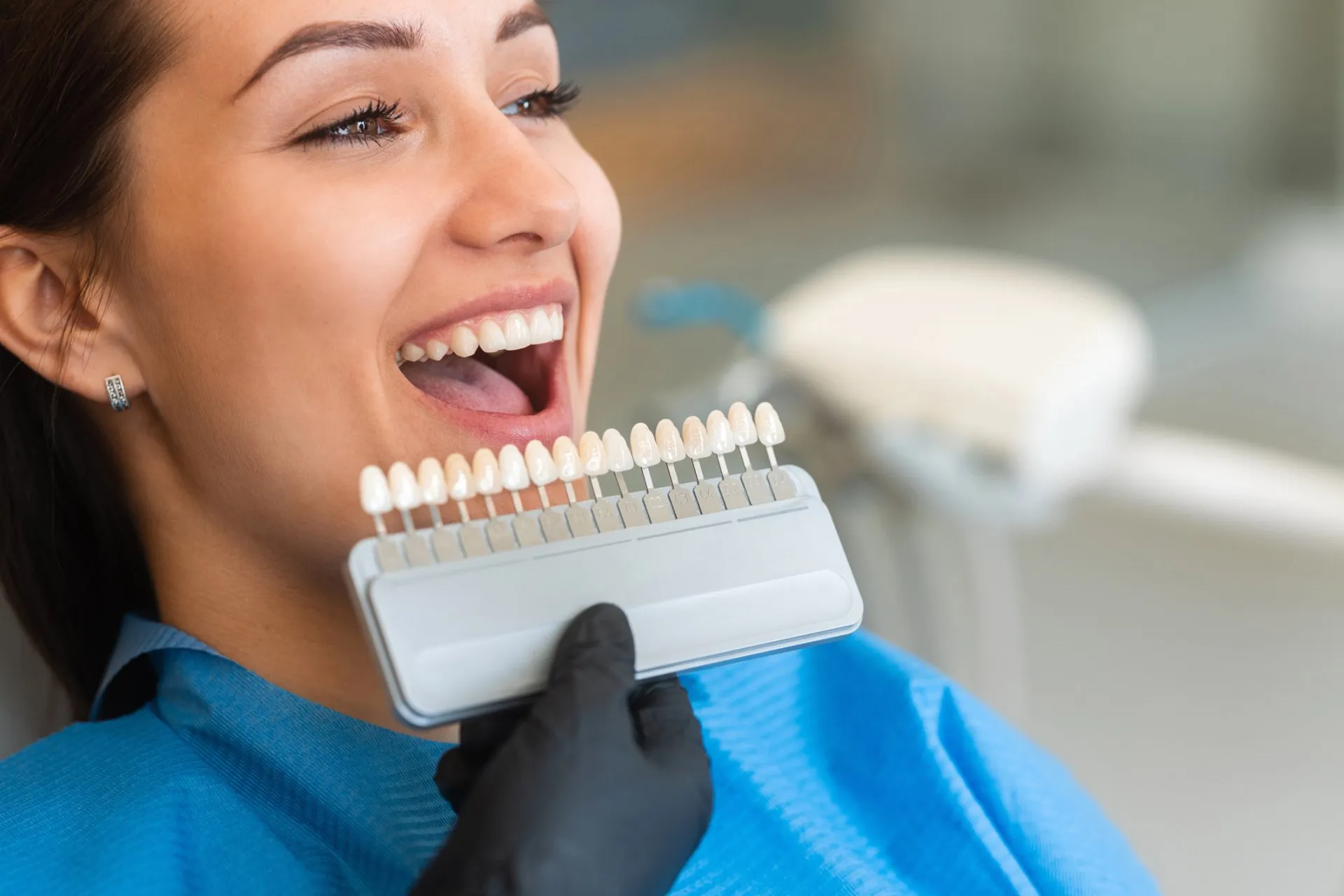
A veneer is a thin shell of porcelain, made to fit the front of one tooth and bonded to it. It covers the surface that shows when you smile and leaves the back of the tooth alone. It's a new face on the tooth rather than a new tooth.
Because each one is made in a dental laboratory rather than built up in the chair, the shape and the color are settled before anything is bonded. You see them and approve them first. That's also why the treatment takes more than one visit.
Veneers are a front-tooth treatment. They're not built for the load a back tooth carries, and a molar that needs covering needs a crown instead.
The part we'd rather you heard first
Fitting a veneer usually means removing a thin layer of enamel from the front of the tooth. Without it the veneer sits proud of the tooth and the tooth looks thick.
Enamel doesn't grow back. Once a tooth has been prepared for a veneer it will need a veneer or a crown on it from then on, and you can't return to the tooth you had. That's not an argument against veneers. It's the reason this is a decision to take home and sit with. Nobody here will ask you to commit on the day you first ask about it.
Looking after them
Brush and floss as you would normally, and keep up your check-ups. The porcelain itself can't decay, but the tooth behind it and the gum edge where it meets the tooth can. That margin is where trouble tends to start, and it's what we're looking at when you come in.
Porcelain in a thin section takes ordinary chewing well and a sharp knock badly. The habits that chip natural front teeth (biting packaging, chewing ice, opening things with your teeth) chip veneers more easily. If you grind at night, a guard protects them.
They won't last for ever, and it's fairer to say so than to imply otherwise. A veneer that chips or comes away is remade rather than repaired. Caught early at a routine appointment, that's a straightforward thing to put right.
Good to know
A thin porcelain facing bonded to the front of a tooth
Usually means removing a little enamel, so it's not reversible
Shape and color approved before anything is bonded
Made in a laboratory, so it takes more than one visit
A front-tooth treatment, not a back-tooth one
What to expect
Four stages, spread over a few visits.
01
We talk it through
You point at what you don't like. We look at the teeth and the gums around them, then tell you plainly whether a veneer actually fixes it.
02
We prepare the teeth
Under local anesthetic we take off a thin layer of enamel and take a scan or an impression. You'll wear temporaries while the lab works.
03
The lab builds them
A technician makes each veneer to the shape and the shade you agreed at your preparation visit.
04
We fit them
We try them in and look at them in daylight before bonding. Speak up at that point — changes afterward mean remaking them.
Candidacy
Are veneers the right answer for you?
Veneers make the most sense when the problem is the surface of several front teeth at once and nothing smaller reaches it. Often there's a smaller answer, and it's worth ruling out first.
Staining that whitening hasn't shifted.
Front edges worn short over many years.
Small gaps you'd rather not wear a brace to close.
The teeth themselves are sound rather than heavily filled or broken.
Your gums are healthy, and nothing else needs treating first.
You're content that removing a little enamel can't be undone.
Common questions
Are veneers reversible if I change my mind?
In most cases, no. Fitting a veneer usually means removing a thin layer of enamel from the front of the tooth so the veneer sits flush rather than looking bulky, and enamel doesn't grow back. From that point the tooth will need a veneer or a crown on it. That's exactly why we'd rather you took the decision home and thought about it than made it in the chair.
Would whitening be enough instead?
Very often it is, and it's the smaller thing to try first. Whitening works on natural enamel and takes nothing away from the tooth, so if the complaint is that your teeth have darkened gradually with age it may get you most of the way there. What it won't do is change the color of existing crowns, veneers or old white fillings, which stay as they are and can end up looking out of place afterward.
How long do veneers last?
They're not for life, and anyone who gives you a figure is guessing about a mouth they haven't examined. A veneer can chip, or the bond can give way, and when that happens it's remade rather than repaired. How long yours would last depends on your bite, whether you grind, and how well the gum edge behind them is kept clean.
Can I have just one veneer?
Sometimes, and it's a reasonable question to ask. A single dark tooth, often one that has had root canal treatment years ago, can be a sensible case for one veneer. Matching a single new veneer to the natural teeth either side of it is the hard part, though, and that's worth discussing honestly before you start rather than after.
I grind my teeth at night. Does that rule veneers out?
Not automatically, but it's the thing most likely to break them, so it has to be dealt with first rather than mentioned afterward. Porcelain in a thin section stands up well to ordinary chewing and much less well to grinding. If you do grind, expect a night guard to be part of the conversation, and expect us to say so before any enamel is touched.
Am I too old for veneers?
Age on its own isn't the deciding factor. What matters is the state of your gums, how much enamel is left on the teeth in question, and what work those teeth have already had. A heavily filled or broken tooth is usually a crown case rather than a veneer case. Gum recession over the years can also expose the edge of a veneer, which is worth knowing about beforehand.
No obligation
Ask about veneers
Tell us what's going on and we'll call you back to arrange a time. If it turns out you need something other than veneers, we'll tell you that too.
Prefer to talk now? (480) 547-8034
Not sure what you need?
That's okay.
Many patients come in knowing something isn't right but aren't sure what treatment they need.
We'll start with a conversation and a thorough evaluation. Dr. Sandstrom will explain what he sees, discuss your options, answer your questions, and help you decide what makes sense for you.